
The sacking of Liam Rosenior as Chelsea manager on April 22, 2026, marks the latest turbulent chapter in a season defined by instability at Stamford Bridge. After a brief tenure lasting just over three months, the club has decided to part ways with the 41-year-old manager, appointing Calum McFarlane as interim head coach for the remainder of the 2025/26 campaign.
This decision, announced following a disastrous 3-0 defeat to Brighton & Hove Albion, reflects a club hierarchy’s struggle to find a long-term solution amidst a performance crisis that has left the team fighting for European qualification.
The End of the Rosenior Era
Liam Rosenior’s departure comes after a run of five consecutive Premier League defeats—a streak that has not only decimated the club’s league standing but also triggered deep concern regarding the team’s tactical direction. During these five games, Chelsea failed to register a single goal, marking a historical low for the club and their worst attacking drought in over a century.
Rosenior, who was brought in during the January window to replace the departing Enzo Maresca, arrived with a reputation for playing an attractive, possession-based style of football. However, his tenure was plagued by inconsistency and an inability to integrate the squad effectively during a high-pressure period of the season. The decision to remove him, made with just weeks left in the calendar, indicates that the club’s leadership felt the trajectory of the team was too alarming to ignore, particularly with an FA Cup semi-final against Leeds United looming on the horizon.
The Catalyst: The Brighton Defeat
The 3-0 loss at Brighton proved to be the final straw for the Chelsea board. The nature of the performance—described by many as toothless and disjointed—highlighted the widening gap between the team’s ambitions and their on-pitch reality. Following the match, reports emerged of a disconnect between the manager and the playing squad, with senior players allegedly reacting negatively to post-match comments regarding the team’s output.
For a club of Chelsea’s stature, a run of five losses without scoring is unprecedented in the modern era. The pressure at Stamford Bridge has been relentless all season, and the drop in form effectively handed the initiative to their rivals in the race for European spots, leaving the club currently outside of the top-six positions and fighting for their season’s survival.
Introducing the Interim: Calum McFarlane
In the wake of Rosenior’s dismissal, Chelsea has turned to Calum McFarlane to steady the ship. McFarlane, who has been part of the club’s coaching structure—specifically with the Under-21 side—is not entirely unfamiliar with the first-team environment. He previously served as caretaker manager in January 2026, following the departure of Enzo Maresca, before Rosenior was appointed.
McFarlane’s appointment as interim coach until the end of the season is a clear sign that the club is looking for stability and damage limitation rather than an immediate tactical revolution. His primary mandate is twofold:
- Stop the Slide: Halt the current losing streak and restore some confidence to a demoralized dressing room.
- Tournament Success: Prepare the team for the upcoming FA Cup semi-final, which now represents the most viable path to salvaging silverware and ensuring European qualification for next season.
A Season of Instability
To understand the current situation, one must look at the chaotic nature of Chelsea’s 2025/26 season. The campaign began with high expectations following a summer of investment, but the managerial turnover has been a recurring theme. The departure of Enzo Maresca in January set the tone, and the subsequent appointment of Rosenior was meant to be a stabilizing force.
The failure of the Rosenior project highlights the significant difficulties the club has faced in maintaining a consistent identity under the current ownership model. Since the change in stewardship, the club has cycled through various tactical philosophies, leaving players, fans, and pundits confused about the long-term project. The reliance on interim solutions, while necessary in emergencies, suggests that the club has yet to establish a coherent strategy for the managerial position, a crucial component for sustained success at the highest level of English football.
The Challenges Ahead
The remainder of the season presents a steep challenge for McFarlane. With the team currently adrift from their targets, the immediate focus must be on regaining structural integrity.
- Tactical Simplification: The team has struggled to convert possession into goals. The interim staff will likely prioritize defensive solidity and more direct play to alleviate the pressure on a squad that has looked visibly shaken by their recent results.
- Player Morale: The most significant task will be to lift the spirits of the squad. After five straight defeats without a goal, confidence is at an all-time low. McFarlane will need to galvanize senior figures in the dressing room and foster a “siege mentality” ahead of the cup semi-final.
- European Qualification: With the Premier League top-four race effectively decided, the focus shifts to ensuring some form of European competition for the following year. A strong finish to the league campaign is required, as the club currently finds itself in a vulnerable position.
Reflecting on the Club’s Direction
The decision to sack Rosenior after only three months is a stark reminder of the “win-now” mentality that dominates the modern Premier League. While the results were undeniably poor, the speed with which the axe fell reflects a club that is increasingly impatient.
This environment makes it difficult for any manager to implement a long-term vision. For the supporters, the frustration is palpable. They have witnessed a revolving door of leadership, and the instability has clearly trickled down to the performances on the pitch. The board now faces the immense task of identifying a permanent successor who can command the dressing room, manage the squad’s expectations, and align with the club’s strategic vision—a task that has proven elusive in recent years.
Chelsea Football Club Statement Regarding Liam Rosenior
LONDON — April 22, 2026
Chelsea Football Club officially announced today that Liam Rosenior has been relieved of his duties as First Team Head Coach, effective immediately.
The decision follows an internal review of the club’s performance trajectory over the recent period. Despite a period of transition, the board of directors concluded that a change in leadership is necessary to ensure the club remains aligned with its strategic objectives for the remainder of the 2025/26 campaign.
In an official communication released this morning, the club expressed its gratitude to Mr. Rosenior for his dedication and professionalism during his tenure at Stamford Bridge.
“We would like to thank Liam for his efforts since joining the club in January. We appreciate the commitment he brought to the role during a challenging period of the season,” a club spokesperson stated. “However, after careful deliberation, the board has determined that a new direction is required to restore performance levels and stabilize the team’s output.”
Interim Management Appointment
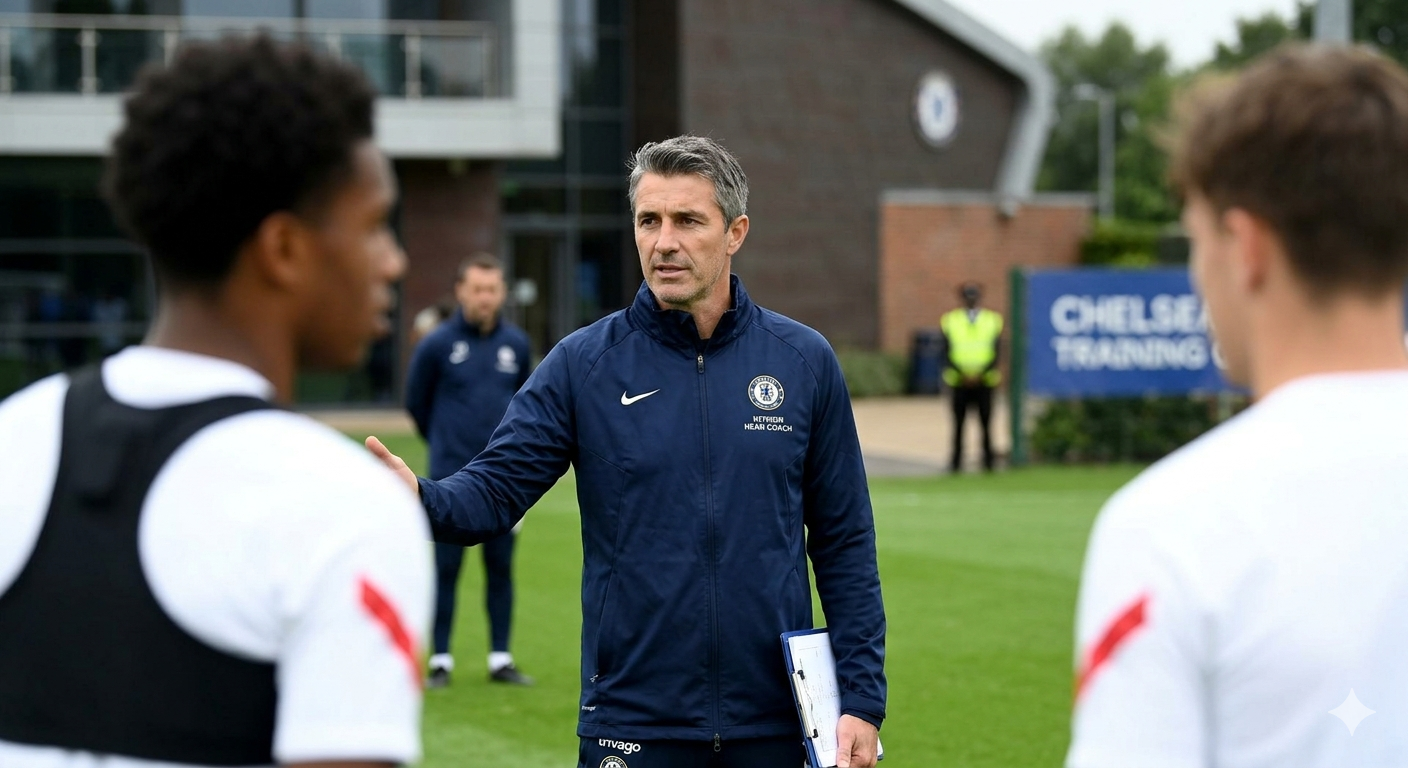
To ensure continuity and stability for the final stretch of the season, Chelsea has appointed Calum McFarlane as Interim Head Coach. McFarlane, who has been a consistent presence within the club’s technical setup, will assume responsibility for first-team training and match-day management immediately.
His primary focus will be to prepare the squad for the upcoming fixtures and to address the tactical requirements needed to conclude the season on a positive note.
Looking Ahead
Chelsea Football Club remains focused on its immediate competitive priorities, including forthcoming league commitments and the ongoing cup campaign. The club has indicated that the search for a permanent successor will commence at the conclusion of the season, allowing the board to conduct a thorough and comprehensive process to identify a candidate whose vision aligns with the long-term ambitions of the organization.
The club will make no further comment regarding this matter at this time and asks for the full support of its supporters as the team transitions to the new coaching structure for the final weeks of the term.
Conclusion
As the Chelsea faithful look toward the weekend and the FA Cup semi-final, there is a mix of apprehension and hope. Calum McFarlane finds himself in the spotlight, tasked with navigating a difficult transition and preventing the season from spiraling further.
The removal of Liam Rosenior is a testament to the club’s refusal to accept mediocrity, even in the midst of a campaign that has already been significantly compromised. However, the path forward requires more than just a coaching change; it requires introspection, a renewed sense of purpose, and a return to the standards that have defined Chelsea Football Club for decades. The coming weeks will not only determine the outcome of the current season but will likely set the tone for a vital summer of rebuilding at Stamford Bridge.


