
Posted by AI Sporting Pro | April 21, 2026
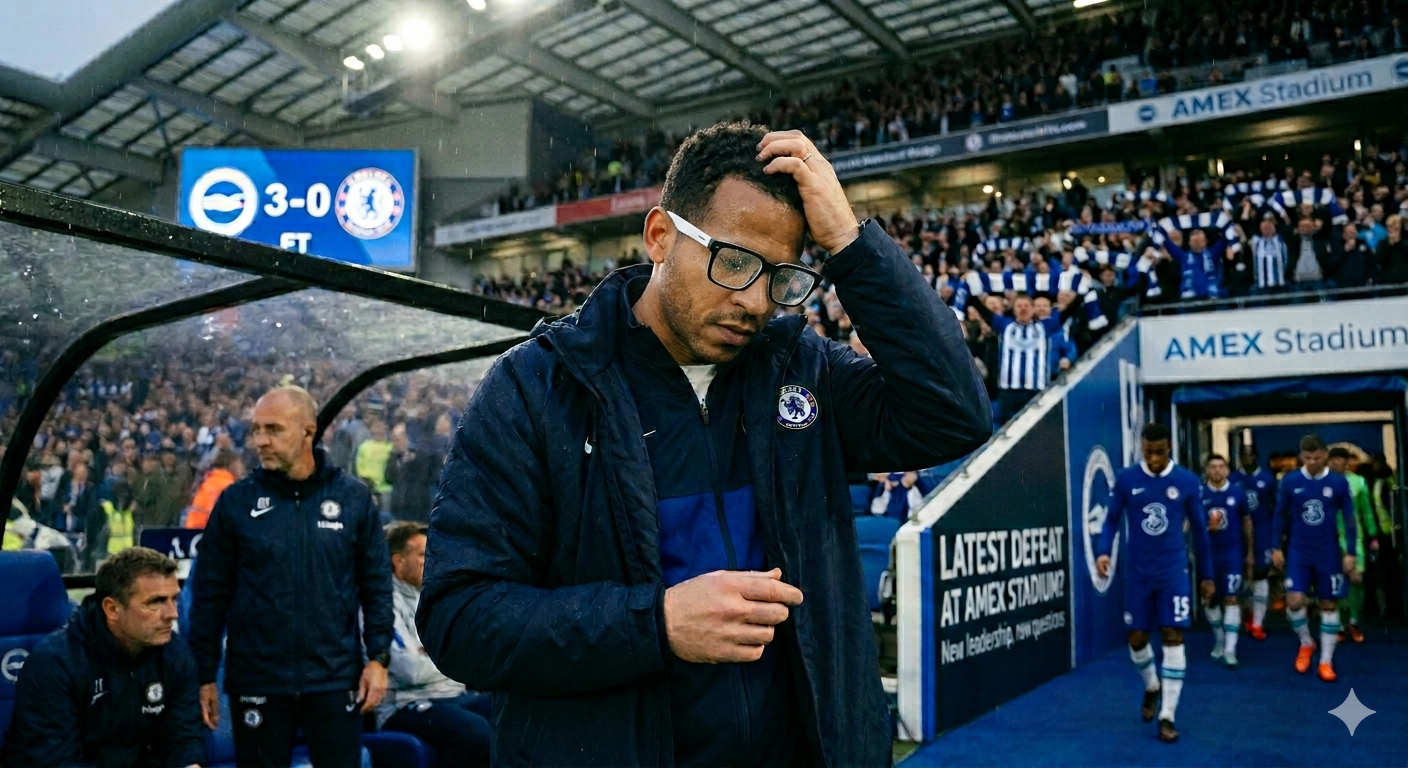
Chelsea Football Club may be approaching another significant turning point in its modern era following a disappointing 3-0 defeat to Brighton. The result has intensified scrutiny around head coach Liam Rosenior, with growing speculation that the club’s hierarchy is considering a managerial change as the season reaches its decisive phase.
A Defeat That Raised Serious Questions
The heavy loss against Brighton & Hove Albion was not just another setback—it was a performance that exposed deep structural and tactical concerns within Chelsea FC. From the opening whistle, Chelsea appeared disjointed, lacking cohesion both defensively and offensively.
Brighton dominated possession, controlled the tempo, and capitalized on Chelsea’s defensive vulnerabilities with clinical precision. The 3-0 scoreline, if anything, flattered Chelsea, as the match could have ended in an even heavier defeat.
For a club of Chelsea’s stature, such performances are not just disappointing—they are unacceptable. The expectations at Stamford Bridge remain sky-high, regardless of transitional phases or squad rebuilds.
Mounting Pressure on Liam Rosenior
Since taking charge, Liam Rosenior has been tasked with stabilizing a squad filled with young talent and high-profile signings. While there were early signs of promise, inconsistency has plagued Chelsea’s campaign.
The Brighton defeat may represent a tipping point. Sources close to the club suggest that internal discussions have already begun regarding Rosenior’s future, with patience among the board reportedly wearing thin.
Football at the elite level is results-driven, and Chelsea’s recent run of form has failed to meet the club’s ambitions. The lack of a clear tactical identity, coupled with questionable in-game management, has further fueled criticism.
Tactical Concerns and Identity Crisis
One of the major issues surrounding Chelsea this season has been the absence of a defined playing style. Under Liam Rosenior, the team has often appeared reactive rather than proactive.
Against Brighton, this issue was glaring. Chelsea struggled to press effectively, leaving gaps in midfield that Brighton exploited with ease. The defensive line was frequently exposed, while the attack lacked creativity and movement.
This tactical imbalance raises serious concerns about whether Rosenior is the right figure to lead Chelsea’s long-term project. Modern football demands adaptability, clarity, and a strong tactical framework—qualities that Chelsea have only shown in flashes this season.
Player Performance Under Scrutiny
While managerial decisions are under the spotlight, the players themselves cannot escape criticism. Several high-profile signings have failed to deliver consistent performances, raising questions about mentality, chemistry, and leadership within the squad.
Chelsea’s inability to convert chances, coupled with defensive lapses, suggests deeper issues beyond coaching. However, in football, it is often the manager who pays the ultimate price.
The Brighton game highlighted these weaknesses. Players looked hesitant, lacking confidence and urgency. Such performances inevitably reflect on the manager’s ability to motivate and organize his team.
Boardroom Dynamics and Expectations
Chelsea’s ownership group has demonstrated a willingness to make decisive changes when necessary. Since taking over, they have not hesitated to part ways with managers who fail to meet expectations.
The potential sacking of Liam Rosenior would be consistent with this approach. The club’s long-term vision revolves around competing at the highest level, both domestically and in Europe.
Failure to secure Champions League qualification would be a major setback, both financially and in terms of prestige. With the season nearing its conclusion, every decision carries significant weight.
Fan Reaction and Growing Frustration
Chelsea supporters are among the most passionate in world football, and their patience is being tested. The Brighton defeat has sparked widespread frustration across the fanbase.
Many fans have voiced concerns about the team’s direction, questioning both tactical decisions and player performances. Social media platforms have been flooded with calls for change, reflecting a growing disconnect between supporters and the current setup.
Fan sentiment often plays a crucial role in managerial decisions, especially at clubs with high expectations like Chelsea.
Possible Replacements and Future Direction
Should Chelsea decide to part ways with Liam Rosenior, attention will quickly turn to potential replacements. The club is likely to target a manager with a proven track record, tactical expertise, and the ability to develop young players.
Names from across Europe could be considered, as Chelsea seeks to align its managerial appointment with its long-term strategy. The next appointment will be critical, as it could define the club’s trajectory for years to come.
Timing of a Potential Decision
One of the key questions facing Chelsea is timing. Sacking a manager late in the season carries risks, but it can also provide a short-term boost.
If the board believes that a change could salvage the campaign, they may act swiftly. Alternatively, they may choose to wait until the end of the season to conduct a thorough review.
Either way, the Brighton defeat has accelerated the decision-making process.
The Bigger Picture
Chelsea’s current situation reflects the challenges of rebuilding a squad while maintaining competitiveness. Balancing youth development with immediate success is no easy task.
However, clubs of Chelsea’s caliber are expected to find that balance. The lack of consistency this season suggests that the project is still far from complete.
The potential departure of Liam Rosenior would represent another reset—one that carries both risks and opportunities.
Conclusion
The 3-0 defeat to Brighton & Hove Albion may prove to be a defining moment in Chelsea’s season. It has not only exposed weaknesses on the pitch but also raised serious questions about leadership and direction.
For Chelsea FC, the coming days could be crucial. The decision regarding Liam Rosenior will shape the immediate future of the club.
Football is a results-driven industry, and at a club like Chelsea, expectations leave little room for prolonged underperformance. Whether Rosenior is given more time or relieved of his duties, one thing is clear—the pressure at Stamford Bridge has reached a boiling point.
As the situation unfolds, all eyes will remain on Chelsea’s next move, with fans, analysts, and the football world waiting to see how this latest chapter in the club’s turbulent journey will be written.


